
Nestorianism
When Two Natures Became Two Persons

Nestorianism
(5th Century)
What It Taught
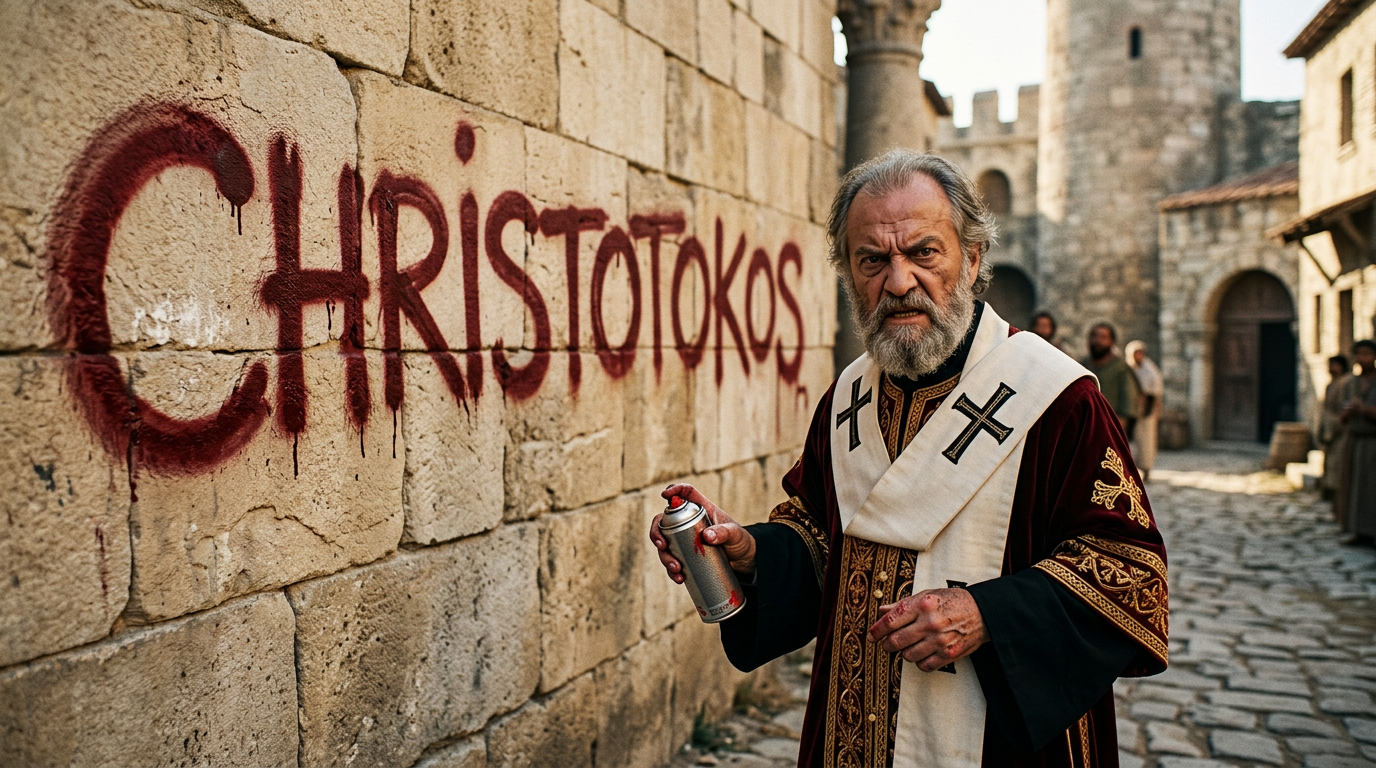
Nestorius became Archbishop of Constantinople in 428 and immediately stirred controversy by objecting to the title Theotokos, God-bearer or Mother of God, applied to the Virgin Mary. He preferred Christotokos, Christ-bearer. His concern was that calling Mary the Mother of God implied that Mary was the source of the divine nature, which was absurd. He taught, or was understood to teach, that Christ was two distinct persons: a divine person and a human person dwelling together in close union, like a man in a garment.
Why It Was Wrong
The problem is that if Christ is two persons, then when he suffers and dies on the cross, it is only the human person who suffers and dies. The divine person remains untouched. But then the death on the cross is not God's act of self-giving love; it is a human being dying, which is happening all the time and accomplishes nothing in itself. The entire claim of the Incarnation, that God himself entered human history and redeemed it from within, is gutted.
The title Theotokos, which Nestorius wanted to eliminate, was actually the test case. Mary is the Mother of God not because she is the source of God's divine nature, which is eternal and uncreated, but because the person she bore in her womb is a divine person. There is only one Christ, and he is the eternal Son of God. What happened to that one person in the womb of Mary, on the cross, and in the tomb, happened to God the Son.
The Church's Response
The Council of Ephesus in 431, convened under Pope Celestine I and led by Cyril of Alexandria, condemned Nestorius and defined that the Virgin Mary is truly Theotokos. The council also defined the unity of Christ's person. When the news reached the city of Ephesus, the people reportedly lit torches and escorted the bishops home in celebration. The title Theotokos was not an obscure theological technicality; it had become the touchstone of correct Christology.
Lasting Consequences
The Nestorian church, which rejected Ephesus, spread east through Persia and eventually reached India and China. Communities descended from this tradition still exist today, particularly the Assyrian Church of the East. The Catholic Church and the Assyrian Church of the East signed a common Christological declaration in 1994 acknowledging that the ancient controversy was partly a matter of different theological vocabulary rather than entirely a difference in substance.
A practical Nestorianism shows up today wherever Christians feel uneasy with the title Theotokos, Mother of God. The discomfort is understandable on the surface: it can sound as though Mary is being elevated to a status she does not have. But the discomfort usually rests on the same confusion Nestorius had, the idea that the title says something about Mary’s own nature rather than about the nature of the person she carried. Mary is the Mother of God not because she is the source of God’s divinity but because the one she bore is a divine person. There is only one Christ, and he is the eternal Son of God. To resist that title is, whether one intends it or not, to resist the unity of his person.
For Catholics preparing to enter the Church, this is often one of the first places the logic of the faith becomes clear in a new way. Honoring Mary as Theotokos is not an add-on to Christology. It is a consequence of it. The Church does not defend that title because of a particular devotion to Mary. It defends it because any weakening of the title is a weakening of the claim that God himself, the eternal Son, is the one who was born, who suffered, and who died for us.